
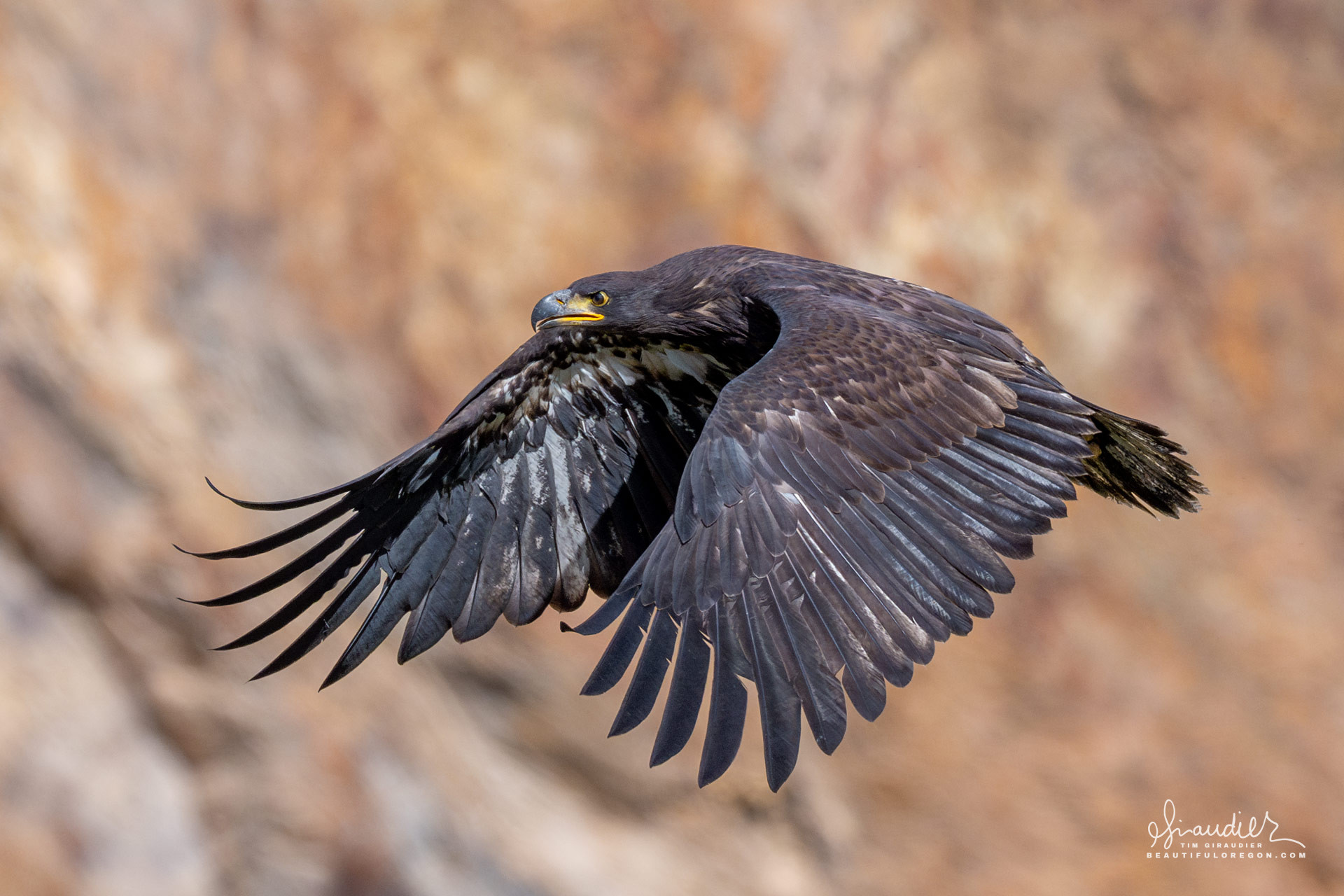
Bald Eagle Fledges and First Flight
$ 49.50
& Free Shipping: UK £40 | EU £50 | Intl £55Growing Toward Flight: The moment a young bald eagle takes its first flight—called fledging—is a powerful and pivotal milestone in its life. This process doesn’t happen all at once. It’s the result of weeks of growth, practice, and gradual confidence-building as the eaglet prepares to leave the safety of its nest. Bald eaglets typically fledge between 10 to 12 weeks of age. In the weeks leading up to this moment, the eaglets undergo significant changes. Their downy feathers are gradually replaced by dark brown juvenile plumage with large flight feathers on the wings and tail. By the time they are ready to fledge, their wings are nearly full-sized, sometimes even longer than an adult’s, giving them the lift and surface area needed to fly. Before taking to the air, eaglets spend many days strengthening their flight muscles. This begins with standing upright, flapping their wings, and hopping from one part of the nest to another. As they grow stronger, they begin “branching”—walking along branches near the nest and making short jumps to nearby perches. These activities are essential for building balance, coordination, and the muscle power needed for sustained flight. The actual moment of fledging usually happens without warning. One day, after many practice hops and flapping sessions, a young bald eagle catches the right wind or builds enough courage—and launches into open air. The first flight is often awkward and brief. The eaglet may glide or flutter to a nearby tree or even descend to the ground if misjudged. Parents usually stay close by, watching carefully and calling encouragement. Unlike songbirds that quickly abandon the nest, fledgling bald eagles continue to rely on their parents for several weeks after their first flight. They may return to the nest to rest or feed, though many roost nearby in trees or on cliffs. Adults continue to bring food and often coax the young to fly again by calling from a distance or showing prey in flight. After fledging, the young eagle begins to build strength and skill in the air. Early flights tend to be low, slow, and unstable. With practice, however, the fledgling begins to master gliding, landing, and eventually soaring. Play-like behavior, such as chasing siblings or grabbing sticks mid-air, helps sharpen reflexes. Within four to six weeks, a fledgling bald eagle becomes a capable flier, able to travel farther from the nest in search of food. This post-fledging period is crucial. The young eagle not only refines its flying abilities but begins learning to hunt and recognize suitable prey. While parents still provide food, they gradually reduce feeding to encourage independence. The first flight of a bald eagle is the result of careful preparation, physical development, and instinct. Fledging marks the transition from nestling to juvenile—a powerful symbol of growth and freedom. In regions like Central Oregon, where bald eagles nest along rivers, lakes, and forests, the sight of a young eagle soaring for the first time reflects both the health of the ecosystem and the enduring resilience of this iconic bird. Whether you’re watching from afar or studying eagle behavior more closely, understanding the fledging process adds depth and appreciation to one of nature’s most inspiring life stages. In this image, a twelve week old Bald Eagle has just fledged, and spectacularly practices flying around its nesting tree. Lower Crooked River, Deschutes County. Bald Eagle, Deschutes County, Oregon State Parks