
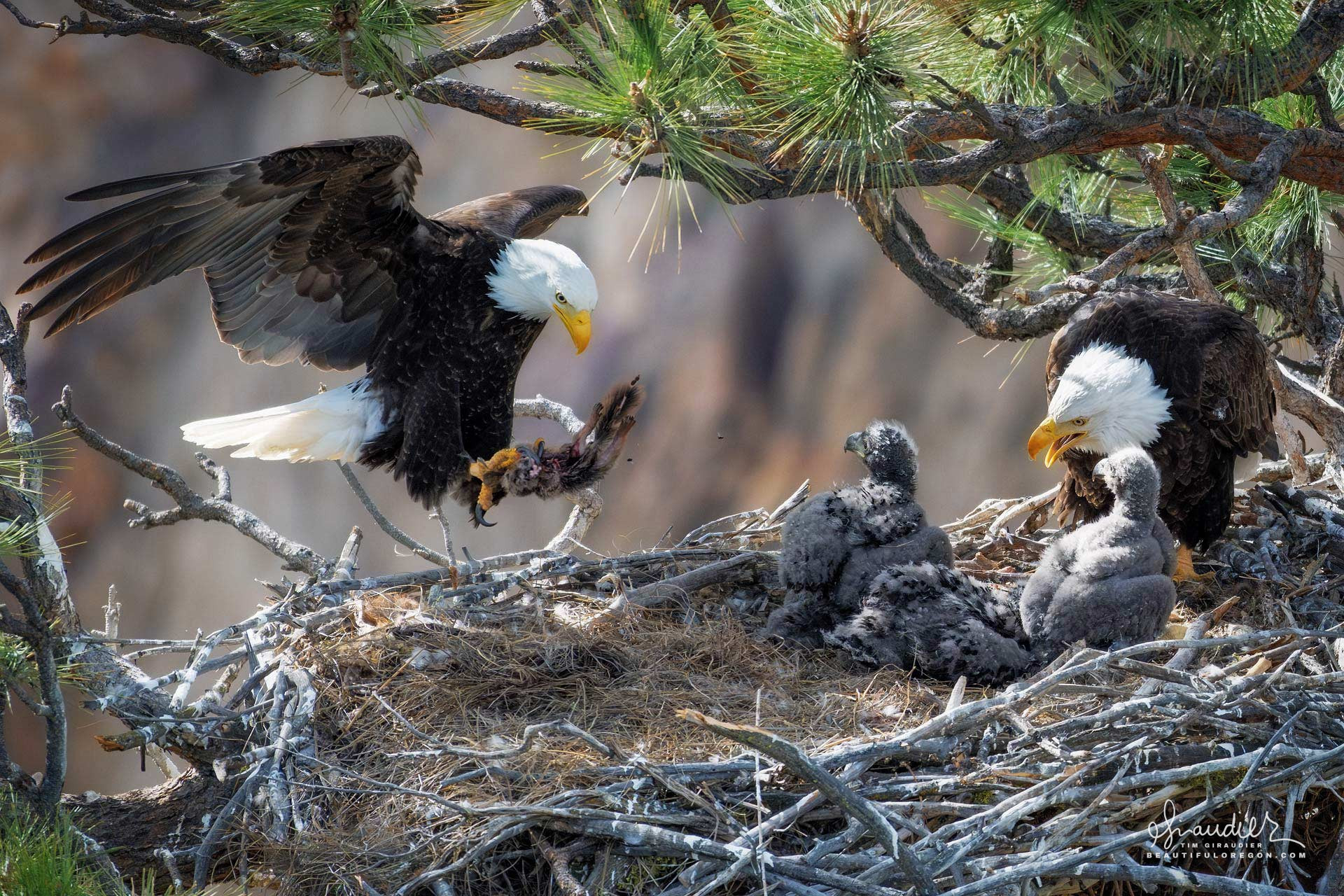
Bald Eagle Nest and Eaglets – Central Oregon
$ 49.50
& Free Shipping: UK £40 | EU £50 | Intl £55Nesting Habits of Bald Eagles in Eastern Oregon In the expansive landscapes of eastern Oregon, the bald eagle (Haliaeetus leucocephalus) finds a rugged and resource-rich environment ideally suited to its nesting requirements. These iconic raptors, once imperiled across much of their range, have reestablished robust populations in the region due to both natural habitat availability and sustained conservation efforts. From the forested slopes of the Blue Mountains to the high desert lakes of the Harney Basin, eastern Oregon supports a variety of nesting sites that reflect the species’ adaptability and ecological significance. Bald eagles in this region typically begin nesting activities during the late winter months, with courtship and nest maintenance often observed as early as January. Pairs are monogamous and often return to the same nesting territory year after year, frequently reusing and adding to existing nests. These nests—constructed primarily of large sticks and lined with softer materials like grasses, moss, and feathers—can reach enormous sizes over time, sometimes exceeding 6 feet in diameter and weighing several hundred pounds. Preferred nest sites in eastern Oregon are typically located in tall trees near large bodies of water. In riparian corridors along the John Day or Grande Ronde rivers, cottonwoods and ponderosa pines offer ideal perches for nest-building. In more open landscapes, such as those surrounding Upper Klamath Lake or Malheur National Wildlife Refuge, bald eagles may nest in isolated groves, snags, or even use human-made structures where trees are scarce. Proximity to water is critical, as eagles rely heavily on fish as their primary food source, although they also consume waterfowl, small mammals, and carrion, depending on availability and seasonal conditions. Nesting territories are typically spaced to minimize competition, with pairs defending areas that provide sufficient prey resources and minimal disturbance. Eagles often select sites with broad visibility, allowing them to monitor for intruders and prey from the nest or nearby perches. The height and placement of the nest also reduce vulnerability to predators such as raccoons or great horned owls, which may prey on eggs or chicks. Egg-laying in eastern Oregon generally occurs between February and March. The female usually lays one to three eggs, which are incubated by both parents for about 35 days. After hatching, eaglets remain in the nest for 10 to 12 weeks, during which they are fed a steady diet of fish and other prey delivered by both adults. Parental attentiveness is high during this period, particularly in the early weeks when the young are vulnerable to cold temperatures and predation. Fledging typically occurs between late May and July, though juveniles often remain in the vicinity of the nest for several weeks after their first flight, continuing to rely on the adults for food and protection. Eastern Oregon’s varied ecosystems—ranging from river valleys and wetlands to coniferous forest and sagebrush steppe—support a diverse prey base and a relatively low human population density in many areas, both of which benefit bald eagle nesting success. However, challenges persist. Disturbance from recreation, logging, and development can disrupt breeding activity, especially during the sensitive incubation and early chick-rearing stages. Lead poisoning from ingested ammunition, habitat degradation, and drought-induced prey scarcity also pose ongoing threats. Despite these pressures, the bald eagle’s nesting recovery in eastern Oregon has been a conservation success. From only a few known nesting pairs in the late 20th century, the species has expanded throughout the region, aided by legal protections, public awareness, and active habitat management. Their nests, often perched on solitary trees against vast backdrops of mountain or desert sky, serve as powerful symbols of ecological resilience. As bald eagles continue to reclaim historical territories across eastern Oregon, their presence marks a broader story—one of recovery, adaptation, and the enduring need to safeguard the wild systems that support both predator and prey. Their nesting habits, shaped by centuries of evolutionary refinement and modern environmental realities, continue to play out in one of the American West’s most elemental and expansive landscapes. If interested in purchasing gift and note cards of this image, you can find them in my Note Card Gallery here. Bald Eagle, Bird Nest, Deschutes County, Ecology, Oregon State Parks, Smith Rock State Park