
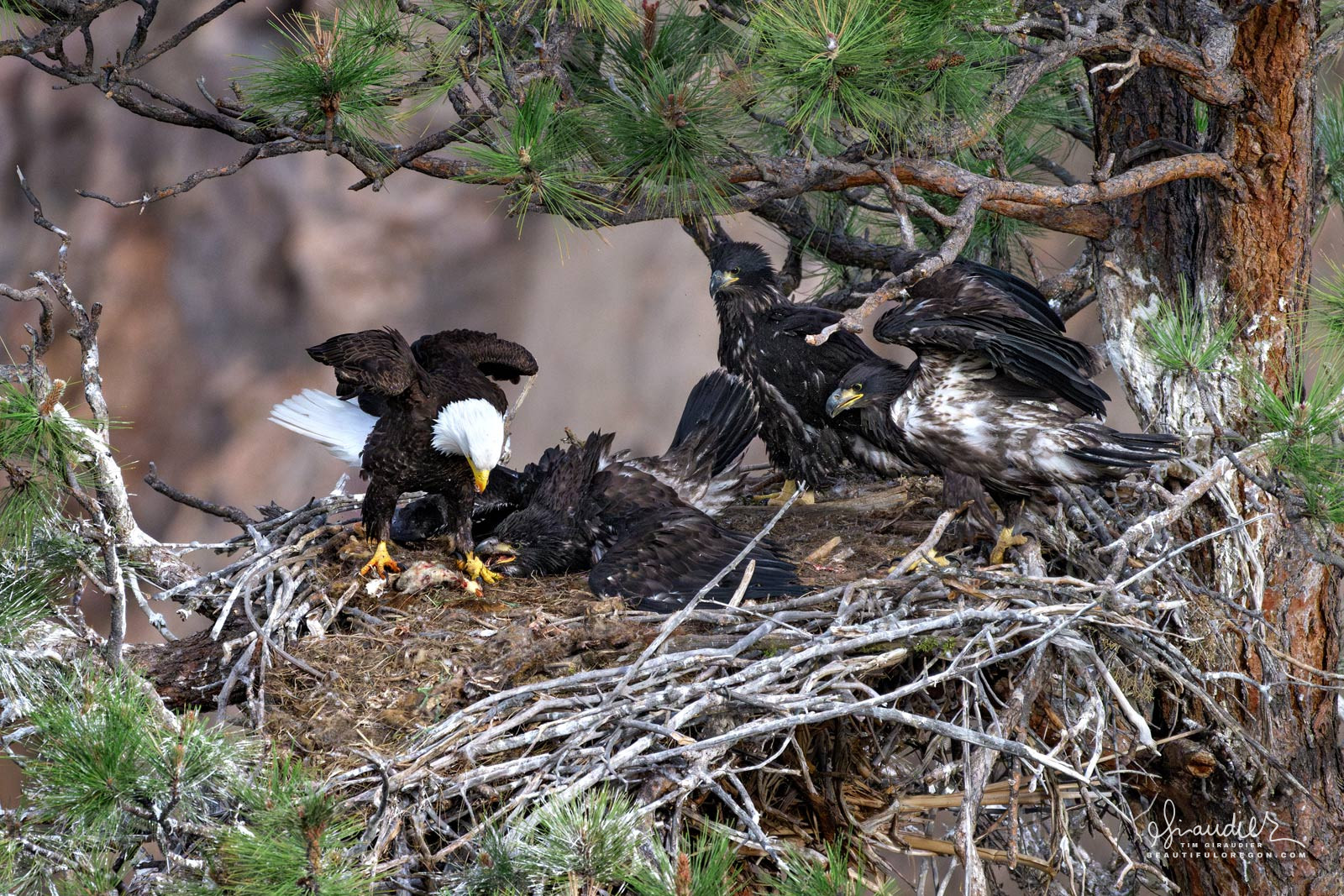
Bald Eagle Nest and Eaglets – Crooked River, Central Oregon
$ 49.50
& Free Shipping: UK £40 | EU £50 | Intl £55Dietary Behavior of Bald Eaglets in Central Oregon: Throughout Central Oregon, the dietary behavior of Bald Eagle nestlings (Haliaeetus leucocephalus) is shaped both the developmental needs of the growing chicks and the varied habitats from which adult eagles draw their food. Nesting typically occurs near lakes, rivers, and reservoirs surrounded by coniferous forest, sagebrush uplands, and wetlands—landscapes that support a diverse prey base. While the eaglets themselves do not hunt, their survival depends entirely on the food-delivering efforts of their parents, who adjust foraging strategies according to prey availability, weather, and the age of their young. Fish form the primary diet of bald eaglets in Central Oregon, particularly in the first weeks after hatching when soft, easily torn prey is essential. Adults commonly bring trout (including rainbow, cutthroat and brown trout), kokanee salmon, and suckers. Bullhead catfish, an exotic species west of the Rocky Mountains, are abundant in many rivers, lakes and ponds are particularly important component of the eaglet diet. In addition to fish, Bald Eagles frequently prey on waterbirds. Ducks, coots, grebes, and even goslings may be brought to the nest, especially during the waterfowl breeding season when both adults and chicks are concentrated in marshes and wet meadows. Upland birds and small mammals such as rabbits, ground squirrels, and muskrats occasionally supplement the diet, particularly in late spring or summer when aquatic prey is less accessible. Not surprisingly, carrion also plays a central role in the diet of many bald eagle pairs in Central Oregon. Road-killed deer and elk provide high-calorie, easily scavenged meals that are often critical to nestling survival. Eagles are known to patrol roadways and scavenge at carcass dumps or winterkill sites. This behavior is particularly beneficial in years with late snowmelt or poor fish recruitment, when live prey is scarce and energetic demands on adults are high. Road-killed Yellow Marmot was an especially common food item brought back to this nest. As eaglets grow, their dietary behavior changes. During the first two weeks, the chicks are entirely reliant on the adults to tear food into tiny fragments and deliver it directly into their open bills. Fish flesh is the preferred food at this stage. By weeks three to five, the chicks grow more active and begin to peck at prey themselves, though they still rely on adults to open up carcasses and separate inedible parts. After week six, eaglets increasingly tear food themselves and engage in competitive feeding, often monopolizing prey items depending on size hierarchy within the brood. By the time they near fledging—around ten to twelve weeks—they can consume whole prey items with minimal assistance. Throughout the nestling period, adult bald eagles adjust their foraging range and target species to meet the growing food demands of their offspring. In Central Oregon, this can mean daily round-trip flights of several kilometers, timed to match fish movements, bird breeding activity, or carrion availability. The success of eagle reproduction is closely tied to the availability of accessible prey—not only wild, live-caught fish and birds but also roadkill. The diet of bald eaglets in Central Oregon reflects both the opportunism of their parents and the ecological diversity of the landscape. From trout and bullhead catfish to ducklings and marmot carcasses, the range of prey items underscores the species’ adaptability and highlights the importance of both aquatic health and carrion availability to the continued success of nesting pairs in this region. Lower Crooked River, Deschutes County, Central Oregon. Bald Eagle, Bird Nest, Deschutes County, Ecology, Oregon State Parks, Ponderosa